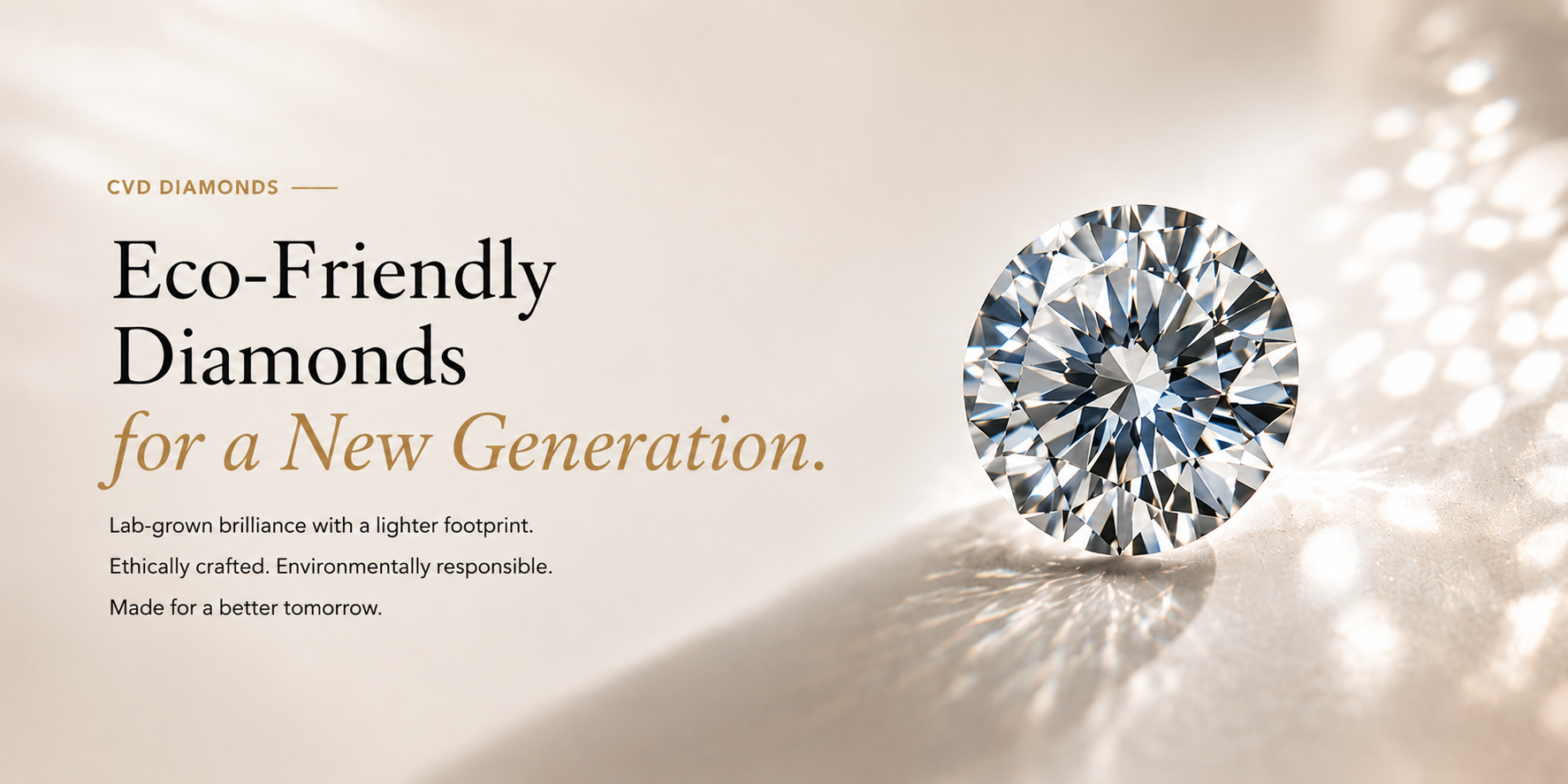
CVD Diamonds
CVD diamonds are becoming one of the most popular choices in the jewellery industry for individuals and jewellery buyers around the world because they offer the same beauty, brilliance, and durability as natural diamonds at a more affordable price.
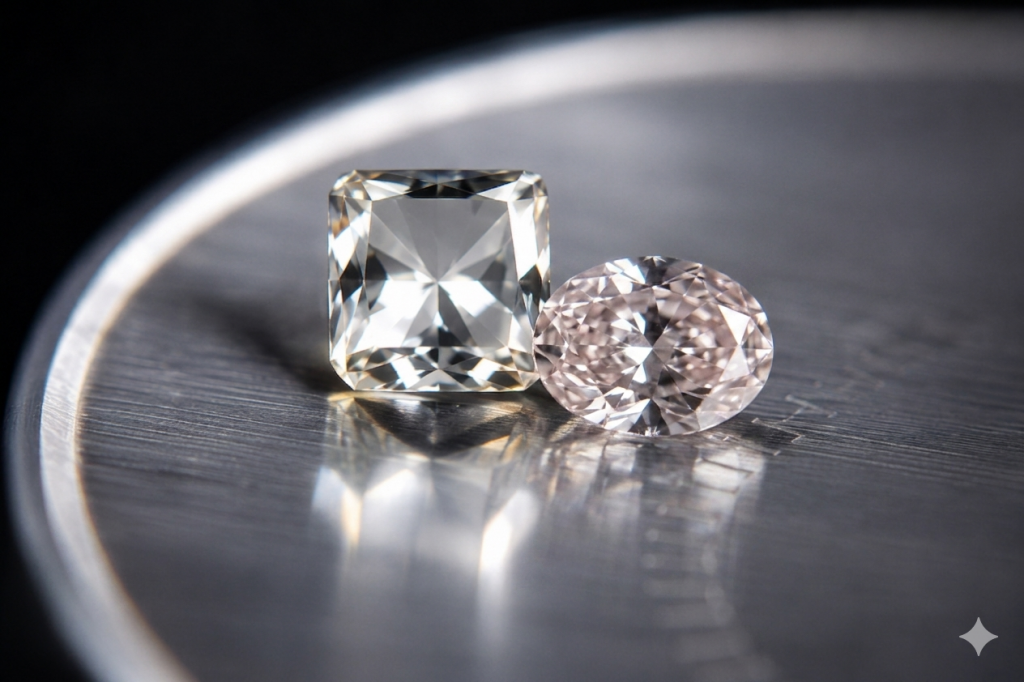
Earlier, many people could not afford to buy diamonds, but with the invention of CVD diamonds, diamond jewellery has become accessible to almost everyone. These diamonds are created using advanced technology in a laboratory environment and are widely used in engagement rings, tennis bracelets, fine jewellery, and luxury collections worldwide.
With increasing awareness about sustainability and ethical sourcing, many buyers now prefer CVD diamonds over mined diamonds.
What is CVD Diamond?
CVD diamond full form is Chemical Vapor Deposition diamond. It is a lab-grown diamond created using a modern scientific process that converts carbon into a real diamond, same as natural diamonds formed inside the earth.
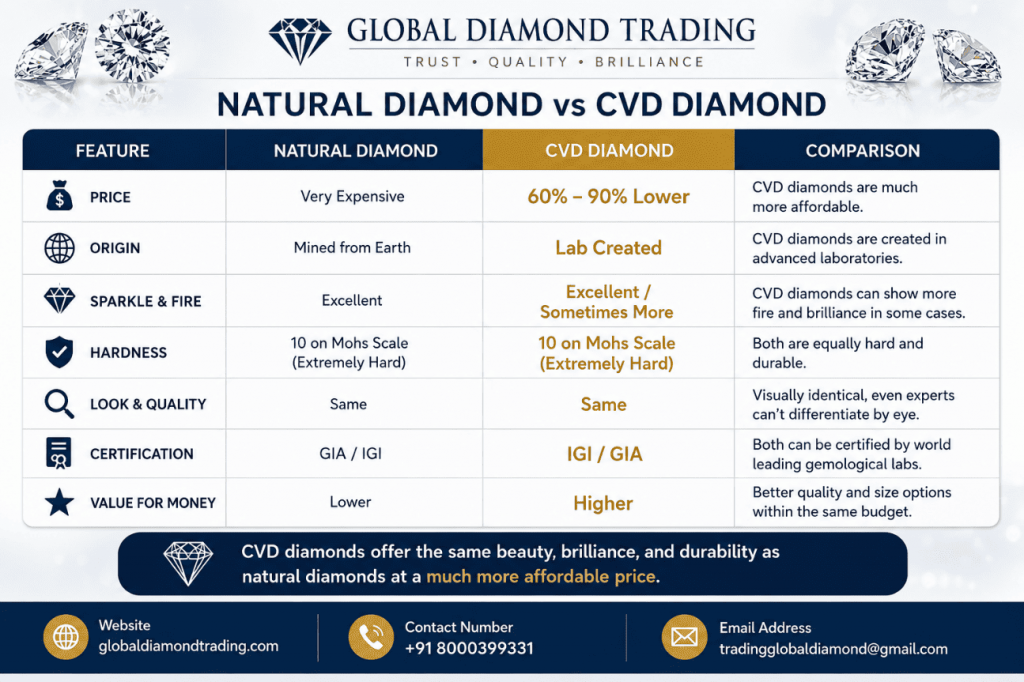
If you place a CVD diamond and a natural diamond together, even a diamond expert cannot easily identify the difference by eye. Both have the same sparkle, hardness, and beauty. Without advanced lab testing, it is almost impossible to judge which is natural and which is CVD. Sometimes, CVD diamonds can even show more fire and brilliance than natural diamonds.
1. If you place a CVD diamond and a natural diamond together, even a diamond expert cannot easily identify the difference by eye. Both have the same sparkle, hardness, and beauty. Without advanced lab testing, it is almost impossible to judge which is natural and which is CVD. Sometimes, CVD diamonds can even show more fire and brilliance than natural diamonds.
2. CVD diamonds have the same physical, chemical, and optical properties as natural diamonds. They have the same sparkle, hardness, and durability, making them an excellent choice for jewellery lovers and diamond buyers worldwide.
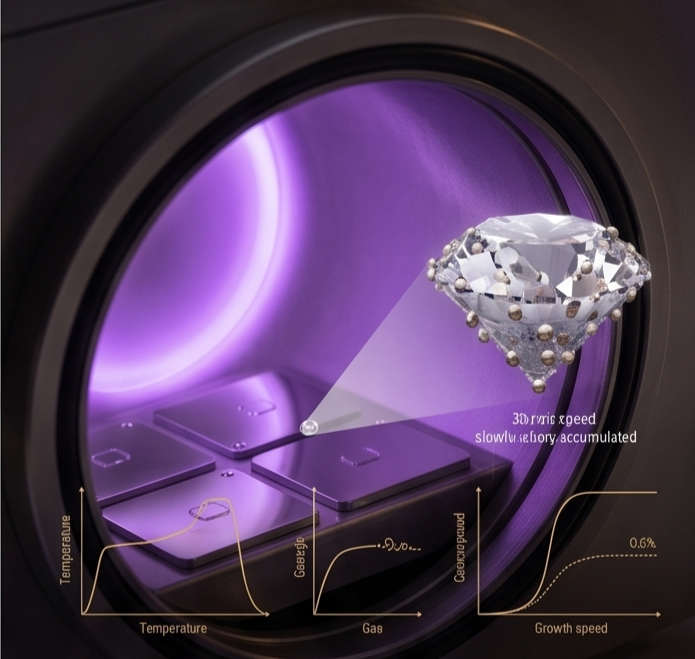
3. A small diamond seed is placed inside a specialized chamber filled with carbon-rich gases. Under controlled temperature and pressure, carbon atoms slowly build layer by layer on the seed, forming a real diamond crystal.
4. These diamonds are also available in different shapes, sizes, colors, and clarity grades, same like mined diamonds.
What Is the Price of CVD Diamond?
CVD diamond prices have changed the global diamond industry because now people can buy CVD diamonds at much lower prices compared to natural mined diamonds. This is because CVD diamonds are created in laboratories using machines, electricity, and only a few employees. They can even be produced in a small room setup, which makes the production cost much cheaper compared to mining natural diamonds from the earth.
For bigger solitaire stones, 1 carat CVD diamond price in white color with D color, VVS purity, and excellent cut starts from around 125 USD per carat in any shape such as Round, Oval, Pear, Emerald, Cushion, or Princess cut.
For fancy color CVD diamonds 1 carat prices start from around 150 USD per carat depending on the color intensity, shape, and quality.
To get more details about CVD diamond prices, you can directly contact the manufacturer for the latest rates and available stock.
For CVD Small diamond prices, we have added complete price details for every shape, color, and clarity of CVD diamonds. You can download the full price list from
here.
What Is the Complete Process of Making CVD Diamonds?
CVD diamond process is one of the most advanced technologies used to create lab grown diamonds. The CVD diamond making process creates real diamonds in a laboratory environment using carbon-rich gases, heat, and advanced scientific technology. These diamonds have the same physical, chemical, and optical properties as natural diamonds.
Today, the CVD diamond manufacturing process is widely used in Surat, India, which is one of the biggest hubs for lab grown diamond production and polishing in the world.
Step 1: Selecting a Diamond Seed
The first step in the CVD diamond making process is selecting a small diamond seed. This seed is usually a thin slice made from pure carbon diamond crystal structure, high purity diamond material, and mostly Type IIa diamond crystal. These seeds are mainly produced in India, Singapore, and China.
- The quality of the seed is very important because it directly affects the final quality, clarity, and color of the CVD diamond.
Step 2: Placing the Seed Inside the CVD Chamber
- After selecting the seed, it is placed inside a specialized vacuum chamber called a CVD reactor. The chamber is designed to create a controlled environment with precise temperature and pressure similar to the natural diamond growing environment
Inside the chamber, scientists remove air and create vacuum conditions to start the diamond growth process.
Step 3: Adding Carbon Rich Gases
In the next step, carbon-rich gases such as methane and hydrogen are introduced into the chamber. These gases contain carbon atoms which are the main building blocks of diamonds.
The gases are heated to extremely high temperatures using microwave energy or plasma technology. This process breaks down the gas molecules into tiny carbon particles.
Step 4: Diamond Crystal Growth
- Once the gases break apart, pure carbon atoms slowly start attaching layer by layer on the diamond seed. Over time, these carbon layers continue growing and form a larger diamond crystal.
This is the most important stage in the CVD diamond production process. The growth can take several weeks depending on the size and quality required.
The process carefully controls:
- Temperature
- Gas composition
- Pressure
- Growth speed
These conditions help produce high quality CVD diamonds with better clarity and brilliance.
Step 5: Cooling and Removing the Diamond
After the diamond reaches the required size, the chamber is slowly cooled down. The grown rough CVD diamond is then removed from the machine.
At this stage, the diamond looks like a rough unpolished stone.
Step 6: Cutting and Polishing
- After growth and treatment, expert diamond planners first make a planning design in the machine and decide the best shape with maximum clarity and maximum weight retention. After planning, skilled diamond polishers manually shape the rough diamond into different cuts such as:
- Round
- Oval
- Pear
- Emerald
- Cushion
- Princess
- The diamond is then polished carefully to maximize sparkle, fire, and brilliance.
Step 7: Certification and Grading
The final diamond is sent to laboratories such as IGI or GIA for certification. Experts grade the diamond based on:
- Cut
- Color
- Clarity
- Carat Weight
Certified CVD diamonds are then used in engagement rings, tennis bracelets, earrings, pendants, and luxury jewellery worldwide.